


Jauma natural wines
All Jauma Wines are natural wines — made from organic fruit, with zero additions of anything but grapes. Juicy, rich, textural, alive, and vibrant, these wines are grown and farmed in McLaren Vale, and here on Jauma Farm in Lenswood. They speak directly from the soil and are lovingly handcrafted by James Erskine and the Jauma team, at Jauma Farm Winery.

Natural wine made from organic grapes, nothing more
Jauma wine is made from organically farmed McLaren Vale fruit. These vineyards are grown by Fiona Wood, Lulu Lunn, Peter and Karen Cahill, and Jim Zarella, and we maintain long term relationships with these incredible growers over the past 16 years. Jauma wines are famed for these warm climate varietals, Grenache, Chenin Blanc, Shiraz, and Arneis, with new grafting added in the past years, Sciacarello, Muscat à Petit Grain, and Grenache Blanc.
Jauma Farm in Lenswood has 6 year old vineyards of Chenin, Savignin, Cabernet Franc, Gewürztraminer, with Sangiovese and Fiano plots planted in 2025. These cool climate vineyards are grown by James and Sophie Erskine with our small team, and are Certified Organic with OFC. The first harvest of these wines will be released under a new label, Jauma Farm, in late 2026, and can be found exclusively at Jauma's Cellar Door.
All our wines are produced, bottled and stored here on Jauma Farm at Lenswood in the Adelaide Hills.
Inside the winery, Jauma produces wines from grapes, nothing more. There are no additions of anything — no sulfur, yeasts, acids, tannins, chemicals, preservatives, filtration, polymers, colours, nor any fish, egg or plastic settling agents.
This creates pure and living wines, uninhibited in their portrayal of fruit, terroir and character.
Jauma Wine is famous around the world for it's stability, brightness, integrity, purity, fun and fullness of flavour.


Wines crafted by James Erskine

Jauma winemaker
The small Jauma winemaking team is led by James Erskine, who has pioneered Australian natural wine since 2010. His winemaking journey has taken him around the world, with Jauma wines now enjoyed in over 15 international markets.
James started his career in hospitality, where he became an award-winning sommelier and top wine show judge.
In 2008 James topped the Australian International Court of Master Sommeliers exams. In 2009 he was voted Gourmet Traveller Australian Sommelier of the Year and secured the prestigious Negociants Australia’s Working with Wine Fellowship.
Between vintages and restaurant hours, James went on to complete an honours degree in Agricultural Science through the University of Adelaide and University of California Davis, specialising in soil chemistry.
These days, James and his family run Jauma Farm on Peramangk country in Lenswood, a certified organic property growing cherries, grapevines, apples, pears and vegetables.
As a natural winemaker and farmer, James explores enhancing soil life, activating water use efficiency and disease resistance, nurturing soil and plant health, minimising compaction, utilising activated aerated compost teas, co-cropping, and no-till systems.
Pioneering natural wine since 2010

James Erskine was part of an Aussie gang called Natural Selection Theory, formed in 2010. It played a major role in creating the natural wine movement in Australia and had a profound impact on the wider wine world.
It all began when James and two fellow South Aussie natural winemakers — Tom Shobbrook and Anton van Klopper — began asking some bigger questions about wine and its industry.
Pretty soon, this motley trio was travelling the country in a Land Rover, sleeping on the side of the road and selling demijohns full of sulphite-free wine, which they called 'Voice of the People'.
With this 'simple is best' approach, Natural Selection Theory laid the groundwork for a more open-minded, creative, environmentally conscious and irreverent Australian wine culture.
What is natural wine?
Natural wines arose as a reaction to the chemical industrialisation of farming and the normalisation of chemical additions in the making of wine.
By contrast, natural wine is a philosophy of working with what you have, rather than polishing something to shine so bright you no longer see its form or individuality.
At the same time, natural wine questions: what is good wine and who defines this cultural paradigm?
At its best, natural wine offers a unique tale of place and time, with the utmost respect for land and people who work the land. Because this is THE time to make real sustainable practices the norm.


The Adelaide Hills is Australia's natural wine capital.
These natural, living wines are organically farmed and each bottle contains unfiltered, fermented grape juice — nothing else.
Natural wines do taste different to other wine styles — because they are alive. 'Do they age well?' is a question we're often asked. Well, want to try 6-year-old preservative-free, living wine that's bright and supple?


Common questions about natural wine
Do natural wines age well?
Why is there a spritz in the wines?
Why are they bottled under crown seal?
Natural wines do taste and age differently to conventional wine styles — because they are alive.
It is common knowledge among natural wine lovers that time is an essential process for natural wine, they become more stable, mature, vibrant and succinct with time in bottle.
We have opened natural wines cellared for up to 15 years and it is incredible to see how youthful, alive and fruitful they remain.
Carbon dioxide is trapped in wines as a bi-product of fermentation. As wines in the cellar warm up in spring, they begin to de-gas, a bit like a soft drink warming on a table, but not all the gas leaves the wines.
Most wineries will degas their wines by bubbling a non-dissolvable gas through the wines before bottling. This process does not suit natural wines and also strips some of the aromatics.
James first saw still wines bottled under crown seal in Japan and thought: 'What a brilliant idea.' He'd seen too many 'off' flavours from corks he had previously used. In contrast, the uptake of oxygen is minimised under crown seal and the steel cap can also be recycled.
Plus, as a sommelier, James never enjoyed the practice of opening a wine under screw cap. He felt there was no energetic exchange — whereas with a crown seal, you still need to actively find something to open the bottle, like with a cork.
.jpg)

Where to taste Jauma natural wines

Online & in-store
Buy our wines direct from our online store or find us in your local living wine-loving bottle shops, bars and restaurants worldwide. See contact page for our distribution partners.

Jauma Cellar Door
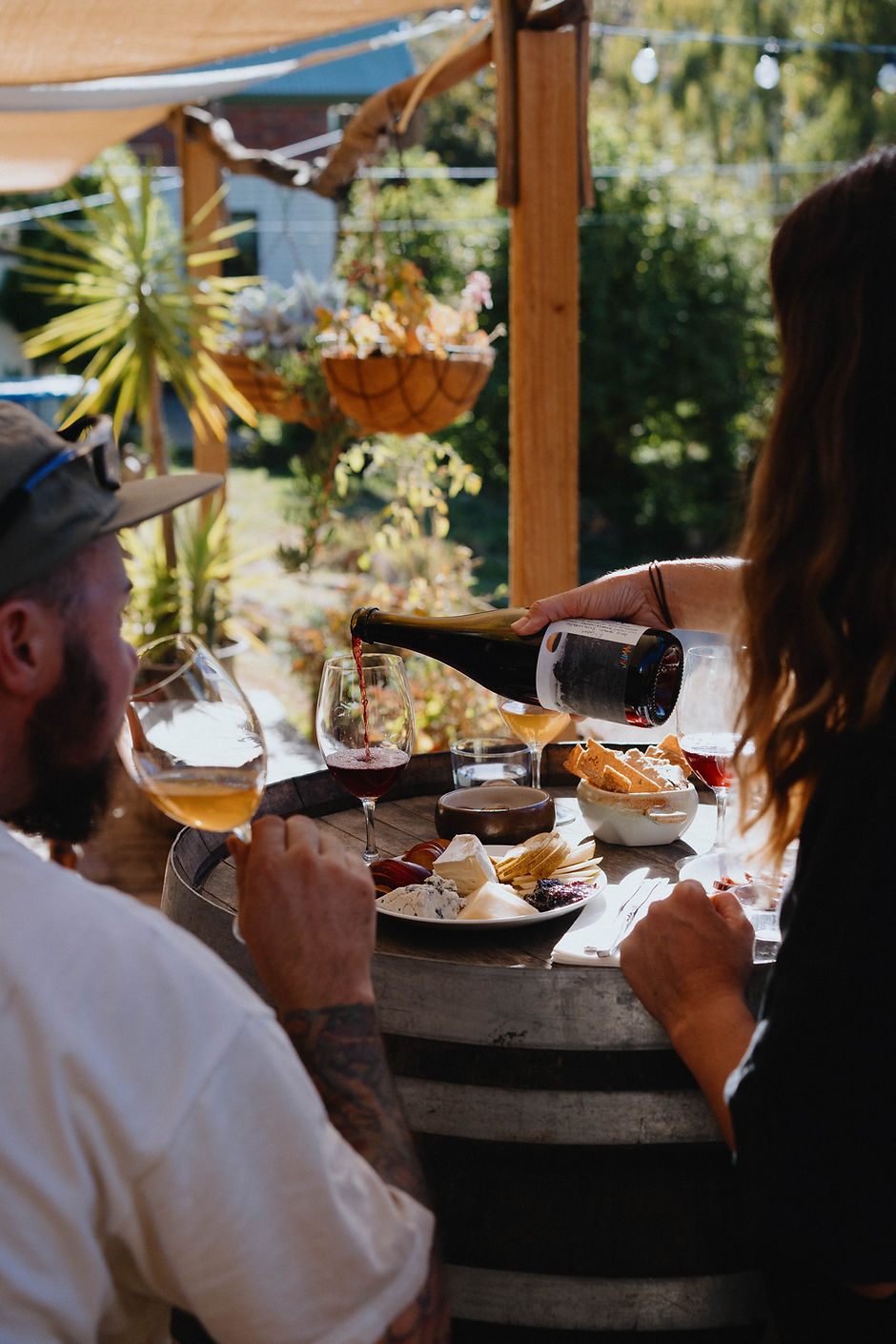
Jauma Farm Cellar Door is open every Saturday.
Enjoy a seated tasting of 6 seasonal wines, or grab a glass or bottle to share with some yummy snack plates.